
Eye Discharge in Dogs: Normal vs. Warning Signs
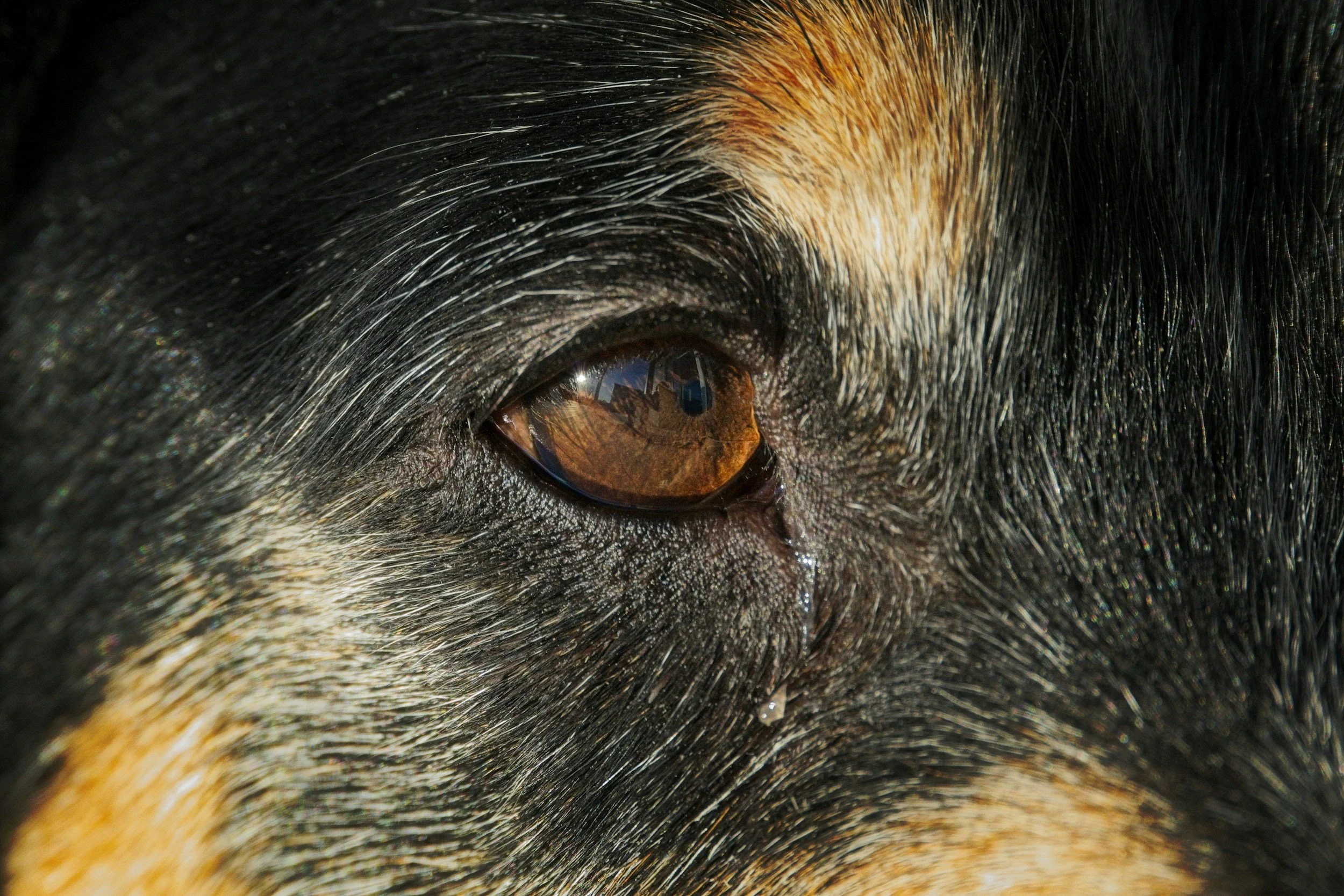
You wipe a little crust from the corner of your dog's eye one morning and think nothing of it. Pets get "sleep" in their eyes just like people do. But a few days later, the discharge is thicker, your dog is pawing at their face, and now you're not sure if this is still a "wait and see" situation or something that needs attention today.
That uncertainty is exactly where we can help. Here's how to tell the difference and when it's time to come in.
Quick Self-Check: Is This Normal?
Before diving into specifics, run through this checklist. If all of these are true, you're likely looking at normal discharge:
The amount is small and hasn't increased
It's clear or slightly rust-colored, not yellow, green, or bloody
There's no odor
The eye itself isn't red, swollen, or squinted
Your pet isn't pawing, rubbing, or avoiding light
If any of those don't check out, keep reading — and consider giving us a call.
Not all discharge means the same thing. Here's a quick reference:
| Appearance | Potential Cause | Urgency |
|---|---|---|
| Clear, watery, minimal | Mild irritation, dust, wind, allergies, etc. | Low — monitor 24-48 hrs |
| Reddish-brown staining of the fur around the eye | Tear pigment (porphyrin) buildup, often cosmetic | Low, unless it suddenly worsens |
| Thick, white-gray, sticky | Significant irritation to the cornea, dry eye (reduced tear production), other | Moderate — needs a diagnosis |
| Yellow or green | Bacterial infection or conjunctivitis | High — same-day care recommended |
| Bloody or one eye only, sudden onset | Possible corneal ulcer, foreign object, or injury | Urgent — don't wait |
Home Care: When You Can Reasonably Wait
If your pet's discharge is mild, clear, and they otherwise seem comfortable, it's reasonable to try home care for a day or two. This could include gently wiping the area with a warm, damp cloth, or a pet safe eye wipe. You can use a sterile saline rinse to flush out minor debris, but avoid using human eye drops without consulting with a veterinarian. Try to keep your pet's fur out of their eyes (just be careful if you try to trim the fur there, as it can be a sensitive place to cut).
Gently wipe the area with a warm, damp cloth or a pet-safe eye wipe
Use a sterile saline rinse to flush out minor debris never use human eye drops unless a vet directs you to
Keep the fur around the eyes trimmed to reduce irritation
Watch closely for any change more discharge, color change, redness, squinting, or your pet starting to rub their face
If things improve, great. If they don't — or get worse — it's time to move past home care.
Red Flags: When It's Time for Urgent Care, Not "Wait and See"
Some symptoms mean the clock is working against you. Corneal ulcers, for example, can develop and worsen very quickly — waiting even a couple of extra days can be the difference between a quick treatment and a much more serious (and potentially permanent) problem.
Come in the same day if you notice:
Yellow or green discharge, especially with redness or swelling
Squinting, blinking excessively, or holding one eye shut
Sudden onset or discharge in only one eye
Your pet pawing or rubbing at their face repeatedly
Cloudiness on the surface of the eye
Sensitivity to light
Any visible injury, bleeding, or trauma to the eye
Urgent Care, ER, or Your Regular Vet: Where Should You Go?
This is often the most confusing part for pet owners, so here's a simple way to think about it:
| Situation | Where to Go |
|---|---|
| Mild clear discharge, pet acting completely normal | Monitor at home, mention at next visit with primary care |
| New yellow/green discharge, squinting, or one-sided onset | Furgent Care — same-day |
| Suspected trauma, deep wound, bleeding, or collapse | Emergency vet immediately |
| Ongoing tear staining with no other symptoms | Primary care veterinarian, non-urgent |
What to Expect at Your Visit
When you bring your pet in for an eye issue, we'll typically:
Examine the eye and surrounding tissue for redness, swelling, or abnormalities
Use a fluorescein stain to evaluate for a scratch, ulcer, or abrasion to the cornea (outer layer of the eye)
Run a Schirmer tear test if there is concern for dry eye (keratoconjunctivitis sicca - KCS)
Potentially other diagnostics like checking intraocular pressure (tonometry) for changes like glaucoma or uveitis
Recommend treatment based on what is found - this may include eye drops, oral medications (anti-inflammatories, pain medications, sedatives), and an elizabethan collar (e-collar, cone).
Help facilitate a referral for a consultation with a veterinary ophthalmologist if needed
Most eye issues are very treatable when caught early. The key is not letting "probably fine" turn into "probably should've come in sooner."
Frequently Asked Questions
Can I use human eye drops on my pet? No, many ingredients in human eye products aren't safe for pets and can make irritation worse. Stick to pet-specific saline or products recommended for your pet by a veterinarian.
Is eye discharge contagious to other pets? Some causes, like upper respiratory infections can lead to ocular discharge, and be contagious between pets. Thankfully, contagious conjunctivitis specifically is generally pretty rare in animals. If you have multiple animals, it is a good idea to keep an eye on the others too.
Why is the discharge only in one eye? One-sided discharge often points to something localized, such as things like a scratch, foreign object, or blocked tear duct rather than a systemic issue.
Are certain breeds more prone to this? Yes. Breeds with flat faces or prominent eyes (Bulldogs, Pugs, Shih Tzus, Persians) tend to have more frequent tearing and are more prone to conditions like dry eye.
Don't Wait If Something Feels Off
Eye changes are always worth close monitoring, as they have the potential to change quickly, resulting in permanent eye changes, vision loss, etc. if it is significant enough. If something is different with your pet’s eye, don't wait for the next available routine appointment. Book a same-day urgent care visit with Furgent Care.
This blog is for general informational purposes and isn't a substitute for an in-person veterinary exam. If your pet's eyes are causing them visible pain, please contact us or your nearest emergency vet right away.